Marukyu Koyamaen Authenticity Guide
We want you to feel confident that the Marukyu Koyamaen matcha you receive from us is authentic. This guide highlights key details to look for, based on information provided by Marukyu Koyamaen.
Inspect the Packaging
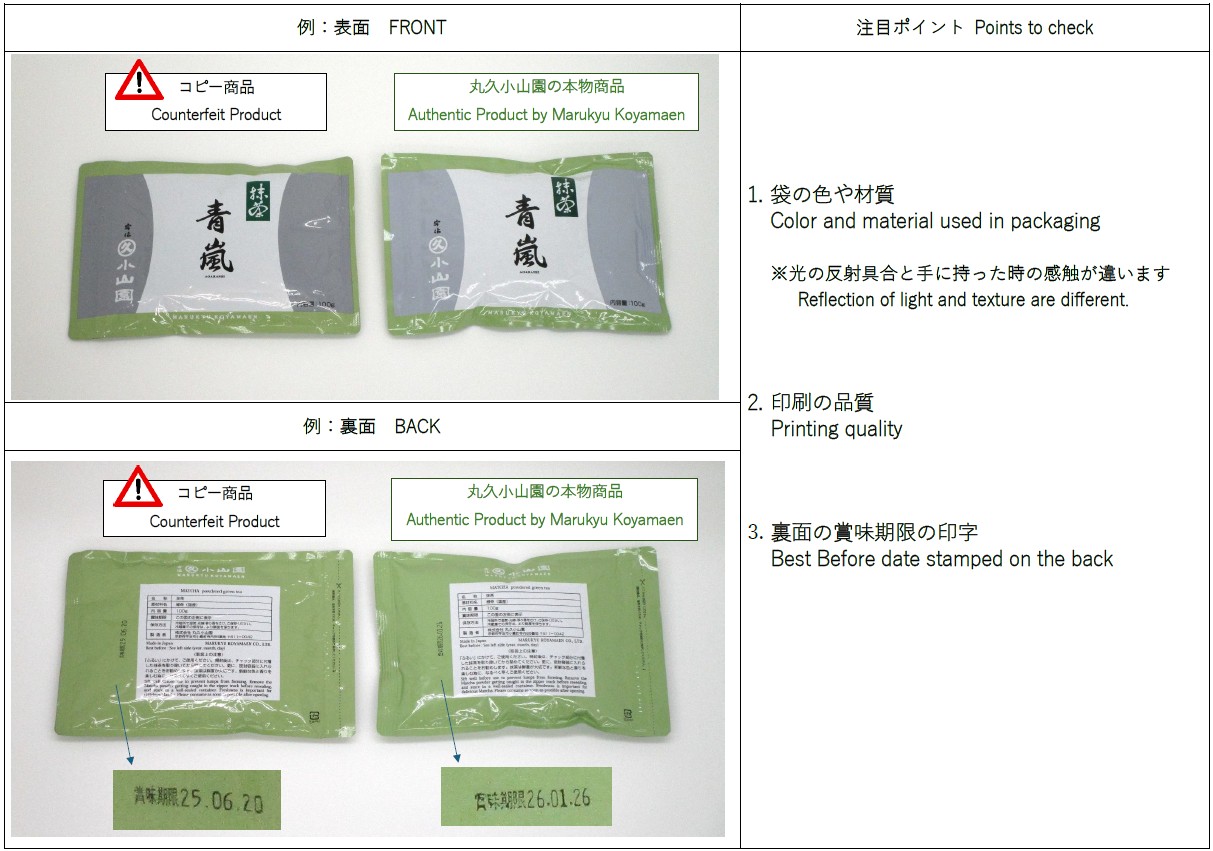
Pay close attention to the material and colour of the packaging.
Authentic Marukyu Koyamaen packaging is generally more flexible and may wrinkle or crease more easily, while counterfeit packaging may feel firmer and more rigid. Counterfeit packaging may also appear slightly darker in tone.
For a visual comparison, see Marukyu Koyamaen’s official counterfeit packaging example.
Check the Best-Before Date
Check the best-before date stamped on the back of the packaging.
Marukyu Koyamaen states that its tea products have a maximum best-before period of seven months from the date of packaging. A longer period would be inconsistent with this stated maximum.
The appearance of the date printing can also be an indicator. In Marukyu Koyamaen’s counterfeit example, the numbers in the best-before date appear noticeably farther apart.
Check the Matcha Itself
Once opened, look at the colour, aroma and taste of the matcha.
Marukyu Koyamaen has reported that counterfeit matcha may appear more yellowish in colour, have a weaker aroma and taste more astringent.
Keep in mind that age and storage can also affect the colour, aroma and flavour of matcha.
Look at the Whole Picture
When checking your Marukyu Koyamaen matcha, consider the packaging, best-before date and the matcha itself together.
One difference alone does not necessarily mean a product is counterfeit, but several inconsistencies may be a reason to take a closer look.